Home About Us Resources | Projects Donate News | Policy Events Store

Resources
Broadcaster Newspaper
Certification Guidebook
Directory of Resources
Fact Sheets
Farm Finances
Funds for Farmers
Organic Research
Other Resources

Projects
Mentoring Program
Rural Women's Project
Trainings | Field Days
Young Organic Stewards


farmfield


cows

FACT SHEETS
Complete List | Starter Packet | Certification | Transitioning | Production Aids | Processing | Marketing | Other Resources


Season Extension

Download PDF to print

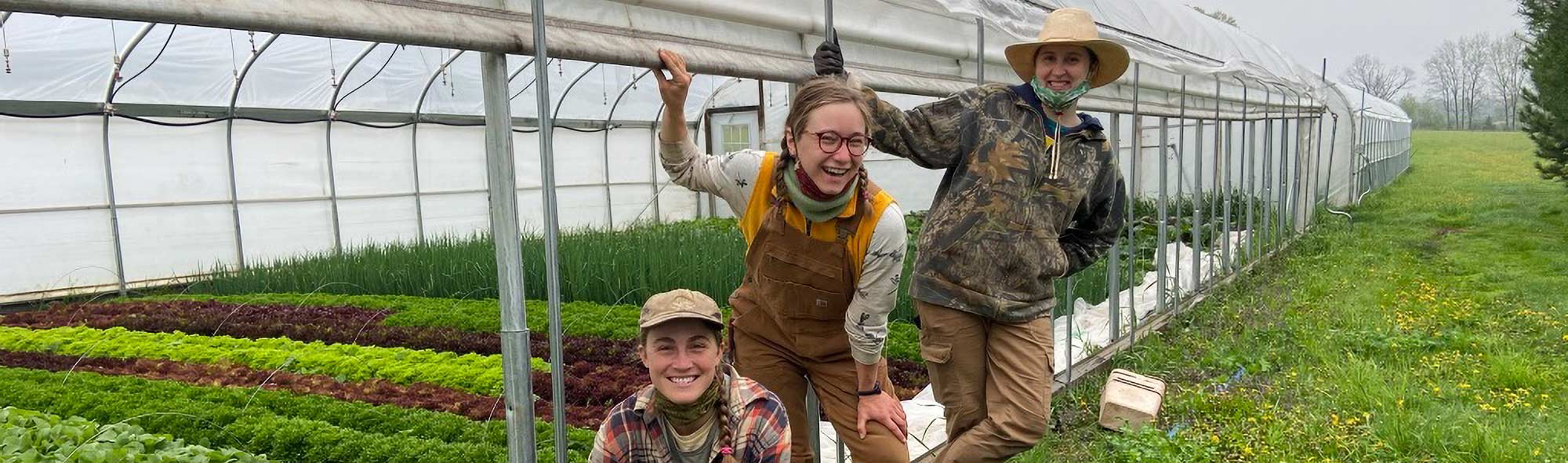
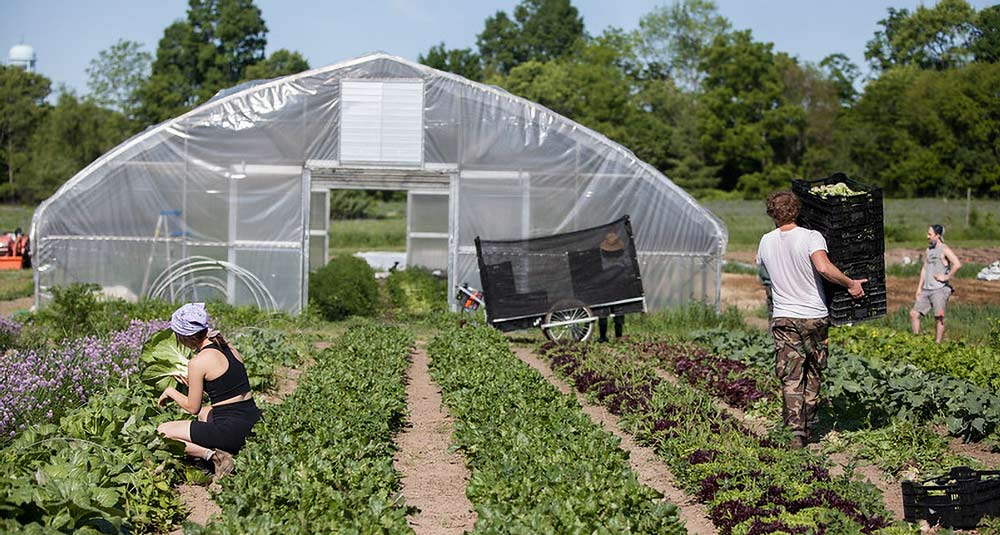
Hoophouses are sprouting up like mushrooms across the Upper Midwest. Markets have opened for local foods, encouraging farmers to “extend” their season beyond what they could produce without this extra protection.

MOSES, in partnership with Minnesota Institute for Sustainable Ag (MISA) and Institute for Agriculture and Trade Policy (IATP), has created the Midwest Season Extension website, www.midwestseasonextension.org. This website connects you with resources, books, websites, and listservs, along with recent articles and the latest research in the area of season extension.

The words “hoophouse” and “high tunnel” are often used interchangeably. Basically, these structures are unheated greenhouses, usually placed over beds that can be planted directly into. Hoophouses can help producers extend their growing season and improve the quality and value of their produce.

5 Key things to consider when thinking about growing in a hoophouse or high tunnel.

Site selection: This should be based on soil type, soil fertility, full sun, good drainage, and low weed pressure. The more time you take to consider your hoop site the more time you’ll save fixing problems later. Level ground is a very important factor in building a hoophouse. You want your ground to be as level as possible, with no more than a 3% slope. Most likely, you already have a field where you are growing produce. Don’t rule out that area for your hoophouse. If you are already planting successfully in a field, you will just be covering it and extending the use of that field with a high tunnel.

Orientation: The standard orientation is to have the center purlin run east/west. This way you get the best light in the winter when the sun is low, and the long side of the high tunnel will face south to collect as much heat as possible. However, your prevailing wind direction may also affect this decision.

What will you grow: Most likely you will be growing a variety of vegetables or small fruit crops to take to farmer’s market, put in a farm stand, or for your CSA shares. Perhaps you want to grow just berries and tomatoes: think this through, since they each need a different type of environment throughout the year. Or possibly, might you produce a crop that requires you to remove the plastic for the winter and then put it back on in the spring? If you are planning tomatoes or cucumbers, will the high tunnel be constructed strongly enough so that you can tie your plant trellises to the greenhouse? Or will you plan to build trellises that are free standing? There are many options for trellising depending on what you are growing.

Remember that for annual crops you cannot, under organic regulations, grow the same annual crops year after year in the same “field.” This regulation is in place for a good reason, and the hoophouse is just like any other field on your farm. Soil fertility and management are the foundations for healthy crop yields as well as pest, disease, and weed control. Crop rotation is critical, so you need to consider what your rotations will be within the hoophouse to both meet your market needs as well as promote healthy soil and nutrient cycling.

Soil fertility: Maintaining soil fertility from year to year can be accomplished by adding compost to your beds along with any organic fertilizers and micronutrients. If you are growing many succession crops you will need to keep amending and fertilizing your soil. Amending your soil can happen in spring or fall, and in many cases is done throughout the growing season. Most of the work in the plant beds can be done using a tiller and different hand tools. Adding at least 2 inches of compost to your beds in the fall or spring will add organic matter to your soil. During the growing season you can till in the crop that is done being harvested and add more compost. Adding to the organic matter in your beds will go a long way toward preventing problems with salt build-up from watering. This also helps avoid diseases that can be a problem in a hoophouse environment. Consider adding short season cover crops such as oats or buckwheat to your rotation.

Watering systems: Whether you are growing many varieties of greens in early spring or late fall, single crops like tomatoes, cucumbers or strawberries, or a combination of all of the above, one critical thing you will need to decide is how you will water your crops. Will you use drip tape, sprinklers, or a hose? The most common hoophouse watering method is drip tape. This is the most efficient way to get the water you need to your plants with very little waste. Generally with drip irrigation one main hose runs the width of the hoophouse, with lines of drip tape lining the rows of each bed. If you are only growing from late spring to late fall, you can probably get by with using a hose as your water source. But if you plan to water in the hoop through the cold, snowy days of winter, what is your water source plan? A large tank with a stock tank heater that serves your drip tape system might be one solution. You would still need to fill the tank using a hose, but not as often during the winter. Unless there are a lot of sunny days, you will probably only need to winter water once every 10 days or so. Overwatering can be a problem too, since cold wet soil and plant leaves can lead to fungal problems.

For more information there are many websites, listservs, blogs, books, videos and on-farm events on how-to construct and start growing in a hoophouse. Below are a few good sources of information:

Websites:
Midwest Season Extension website
www.midwestseasonextension.org

High Tunnels website & listserv
www.hightunnels.org

Au Naturel Farm website
http://aunaturelfarm.homestead.com/

Penn State Center for Plasticulture
http://plasticulture.psu.edu/

U of MN High Tunnel Production website & listserv
http://hightunnels.cfans.umn.edu/

Blogs:
The Hoophouse Blog, by Adam Montri
http://hoophouse.msu.edu/blog/index.php

Books:
1. The Hoophouse Handbook, by Lynn Byczinski
2. The Winter Harvest Manual, by Eliot Coleman
3. Walking to Spring, by Paul & Alison Weidiger
4. The Northlands Winter Greenhouse Manual,
by Carol Ford & Chuck Waibel

For a comprehensive list of resources with everything from structure suppliers to irrigation equipment
to an up-to-date calendar of hoophouse events, visit the Midwest Season Extension Website at
http://www.midwestseasonextension.org.

updated May 2010
Return to TOP