Home About Us Resources | Projects Donate News | Press Events Bookstore
Events
the MOSES Organic Farming Conference
(held annually in La Crosse, WI
along with Organic University)
2010 Blazing Star
OFC Sponsors


ov

op

wholefoods

horizon

rma

Yes! I want to hear about the latest MOSES events & resources. Please add me to your mailing list!
mailing list

farmer hands

WORKSHOPS

Below you'll find descriptions of the 67 workshops offered at our 21st Annual Organic Farming Conference in La Crosse, Wisconsin. Our informative pre-conference flyer mailed out at the end of November. The flyer is a preview of the entire conference, and includes a registration form. Not on our mailing list? Sign-up today!

Continuing Education Unit (CEU) credits for Certified Crop Advisors have been approved through the Certified Crop Advisor Program of the Am. Society of Agronomy. These credits are offered as an ongoing educational certification for registered crop advisors. In 2010 we are offering an impressive total of 96.75 credits in 3 days of programming. Categories include: Soil & Water Management: 17.75 credits, Crop Management: 35.25 credits, Integrated Pest Management: 23.75 credits, Professional Development: 15.5 credits, Nutrient Management: 4.5 credits. Download a CEU Course Guide for more details on specific credit assignments.

Healthy Soils
Prairie Strips for Habitat Enhancement and Erosion Control
USDA Conservation Programs for Organic & Transitioning Farmers
Woody Crops & Agroforestry Principles & Practices
Carbon Sequestration on Organic Farms
An Ecological Look at Pest Suppression in Organic Systems
Managing Perennial Weeds in Annual Cropping Systems
Understanding & Enhancing Soil Organic Matter
Strategies for Transitioning to Organic Production
Overview of Nitrogen Cycling in Agroecosystems
Planning for Flexibility in Effective Crop Rotations
Disease Suppressive Soils & Composts: What does the Science Tell Us?
Soil Characteristics, Processes & Practical Implications
Strategies for Managing the Weed Seedbank & Encouraging Weed Seed Predation
Cover Crop Benefits & Techniques

Field Crops
Current Developments in Organic Corn Breeding
Improving Corn Profitability
Step by Step and Day by Day: Frantzen Family Farm
Organic Management of Soybean Aphids
Conservation Tillage for Organic Row Crops

Market Farming
Three Years of Raising Hogs in an Organic Apple Orchard
Certified Organic Specialty Mushroom Production on Locally Available Substrates
Grafting Vegetables
Enhancing Diversity & Reducing Tillage in Organic Vegetable Systems
Crop Improvement & Variety Development: Accessible Breeding Techniques for Farmers
Hoophouse Basics
Fertility and Water Management in Organic High Tunnels
Creating a Food Safety Plan for Your Market Farm
Succession Planting for CSAs and Market Farms
Pest Control Strategies for the Small Organic Orchard
Profit from Your Woodlands with Medicinal Herbs
Understanding & Preventing Late Blight in Organic Farming Systems

Livestock
Raising Organic Poultry on Pasture
Creative Ways to Improve Profitability on the Organic Dairy Farm
Winter Management of Dairy Cattle
Multi-Species Pasture Stacking
Alternative Hog Production
Parasite Control in Organic Livestock
New addition! The Joys and Challenges of Farming with Horses
Dairy Young Stock Disease Prevention
Organic Sheep Production

Marketing and Business
Planning for Profit
New addition! Bringing Home the Bacon:
     Federal Conservation Programs Working to Support Organic Farmers and Ranchers

The Changing Face of Community Supported Agriculture
New addition! National Organic Action Plan - From the Margins to the Mainstream
Share Your Farm Story: Tools and Tactics to Market Your Business and Connect with Media
Managing Farm Employees Effectively
Using Federal Grant Programs to Support Sustainable Agriculture
Getting Started in Organic Farming
Grant Writing and Applications
CSA Logistics

Misc.
How On-farm Education Can Help to Preserve Farmland
The Science Behind the Research on Organic Food Health
Unconventional Farmers for the 21st Century
Update and Discussion from the State of Organic Seed Symposium
Immigrant Farmers: Successfully Using Organic Methods
Through the Stress and the Haze: Fostering Caring Communication in Farm Families
Organic and Local Foods Form the Backbone of Community Economic Development
Organic Seed Production Basics
Effects of Common Pesticides at Environmental Concentrations
Midwest Organic Farmers in the 1970s: Pioneer Organic Farmers and the Barriers They Overcame in Building the Organic Farming Movement
Telling the Story of Organic Food Health
Squeaky Wheels and Organic Change
Planting Fresh Seeds: Resources, Opportunities & Inspiration for Women Farmers and Ecopreneurs
Pollinator Conservation on Organic Farms
GMOs and the Fight for Organic Integrity
ABC's of Organic Certification
Understanding the Cultural Stigma of Animal Power
Managing Nests for Native Bees
Current Policy Developments Affecting Organic Agriculture

WORKSHOP DESCRIPTIONS

Healthy Soils

Prairie Strips for Habitat Enhancement and Erosion Control
Friday I - 8:30am

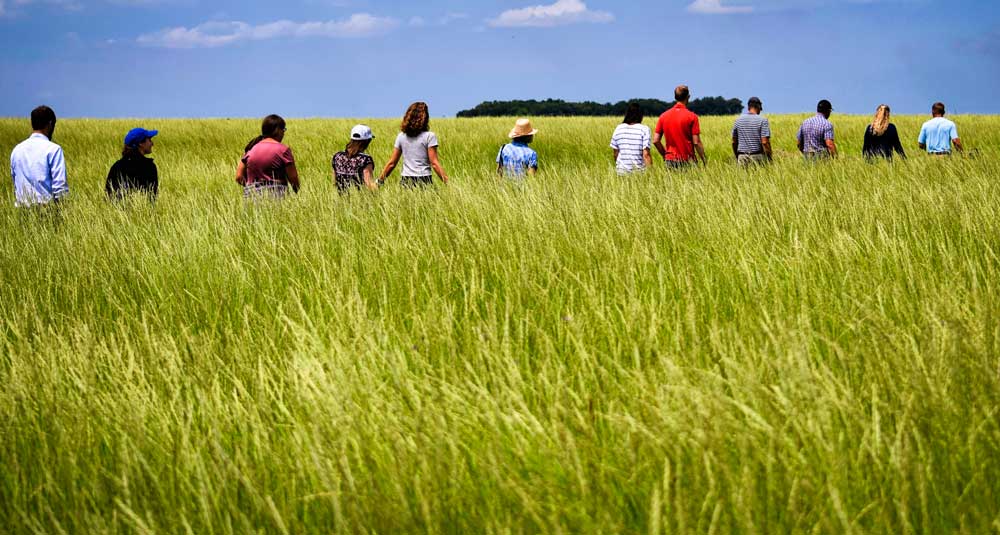
Including prairie areas amid row-cropped fields offers a viable option for creating both on-farm and off-farm benefits. Insects and birds population and use increase, while water quality improves and runoff decreases. Join our team of Iowa State University researchers for a look at establishing and maintaining these systems on your farm.

USDA Conservation Programs for Organic & Transitioning Farmers
Friday II - 2:00pm

The 2008 Farm Bill created new opportunities in conservation programs for organic farmers and those transitioning to organic production. Join the National Sustainable Agriculture Coalitions' Ariane Lotti and the University of Minnesota's Organic Outreach Coordinator Jim Riddle to learn how to take advantage of these programs, and what changes to expect in 2010.

Woody Crops & Agroforestry Principles & Practices
Friday II - 2:00pm

Always wanted to have a perennial farming system and be done with plowing and cultivating forever? Join New Forest Farm and Forest Agriculture Enterprises' Mark Shepard for a discussion of simple agroforestry techniques that will allow you to begin planting your perennial food-forest system while cash-flowing and maintaining the rest of your farming operation.

Carbon Sequestration on Organic Farms
Friday II - 2:00pm

Join Rodale Institute Farm Director Jeff Moyer for a discussion of how current farming practices and policies contribute to global climate change, how agricultural systems may need to adapt to these issues, and how farms can actually mitigate climate change through carbon sequestration. Moyer will highlight readily available tools proven to be successful in building soil carbon levels and improving the soils yield potential.

An Ecological Look at Pest Suppression in Organic Systems
Friday III - 4:00pm

Plants growing in organic systems may be less susceptible to pests than those grown in conventional systems, while common organic practices may increase the activity of arthropod predators. Join Ohio State University's Larry Phelan and Pennsylvania State University's Mary Barbercheck as they discuss their research about the effects of organic practices on crop pest resistance and increased habitat for insect predators.

Managing Perennial Weeds in Annual Cropping Systems
Friday III - 4:00pm

Perennial weeds such as Canada thistle threaten the sustainability of organic farms in the Midwest. They can establish from seed or extensive creeping roots, and are very competitive against annual crops and vegetables. Join University of Illinois' Dan Anderson for info about using integrated management approaches to control perennial weeds.

Understanding & Enhancing Soil Organic Matter
Friday III - 4:00pm

Join Western Illinois University Organic Research Program coordinator Joel Gruver to explore the science and practice of soil organic matter management, as he shares cutting edge science and practical management strategies. This workshop focuses on maximizing on-farm production and retention of organic matter, as well as discussing the importation of organic resources.

Strategies for Transitioning to Organic Production
Saturday I - 8:30am

Transitioning to organic production can pose difficulties for growers used to managing conventionally. University of Illinois' Michelle Wander, Iowa State University's Kathleen Delate, and Ohio State University's Deborah Stinner will discuss the impact of the transition process on soil quality and nutrient availability, insect and disease prevalence, and the soil biological community and overall crop health and productivity.

Overview of Nitrogen Cycling in Agroecosystems
Saturday I - 8:30am

Management of soil organic matter to enhance soil quality and supply nutrients is an important element of successful organic farming, because it involves the mineralization of carbon and nitrogen for short-term crop uptake as well as sequestering carbon and nitrogen for long-term structure and fertility. Join USDA Agricultural Research Service Soil Ecologist Cindy Cambardella for an advanced look at this critical nutrient cycle.

Planning for Flexibility in Effective Crop Rotations
Saturday I - 8:30am

Good crop rotation is critical for effective management of diseases, nutrients, weeds and insects on organic farms. Regular repetition of a sequence of crops is rarely possible, however, due to unpredictable effects of weather and market conditions. Join Cornell University senior research associate Charles Mohler for a look at how to develop flexible approaches to crop rotation that can meet a wide range of goals.

Disease Suppressive Soils & Composts: What does the Science Tell Us?
Saturday II - 2:00pm

Cornell University's Allison Jack and Oregon State University's Alexandra Stone will look at the use of organic amendments and cover crops to suppress diseases in fields and greenhouses. In addition to discussing composts, vermicomposts, and cover crops, this workshop will consider the use of these strategies as part of a whole-farm disease management strategy.

Soil Characteristics, Processes & Practical Implications
Saturday II - 2:00pm

Successful management of soils depends in part upon one's understanding of soil physical properties, such as structure, texture, bulk density, and color. University of Wisconsin - River Falls soil scientists Bill Anderson and Holly Dolliver will explore the ways these soil features contribute to drainage, compaction, fertility, runoff, and overall soil productivity.

Strategies for Managing the Weed Seedbank & Encouraging Weed Seed Predation
Saturday III - 4:00pm

Combining diverse crop rotations with the encouragement of weed seed predators can significantly affect the number and composition of weed seeds on your farm. Join Adam Davis of the University of Illinois and USDA-ARS and John Masiunas of the University of Illinois for this eye-opening discussion of how to manage your land to reduce the overall weed pressure.

Cover Crop Benefits & Techniques
Saturday III - 4:00pm

Discover how cover crops, when properly used in a diverse farming system, provide the key to unlocking your soil's potential. Rodale Institute Farm Director Jeff Moyers will look at cover crops for everything from vegetable production to grain crops, discuss rotation designs that focus on cover crops, and show how green manures can drought-proof your farm.

Field Crops

Current Developments in Organic Corn Breeding
Friday I - 8:30am

Organic farmers need corn seed that fits their unique needs. Brownseed Genetics founder Charles Brown and Michael Fields Agricultural Institute's research director Walter Goldstein will discuss the needs of organic farmers, the history of corn breeding and current industry trends, and whether breeding under organic conditions matters.

Improving Corn Profitability
Friday II - 2:00pm

Corn may be the most profitable crop in your rotation, so don't overlook possibilities for improvement! Join farmer, Holistic Management instructor, and Iowa State University extension specialist Margaret Smith for a review of the agronomic principles of corn production, a discussion of input cost control, and an opportunity to analyze and example corn crop.

Step by Step and Day by Day: Frantzen Family Farm
Friday III - 4:00pm

A journey of a million miles begins with a single step. But are we stepping in the right direction? 2009 MOSES Organic Farmer of the Year Tom Frantzen will share thirty-five years of farming practices and how better decision-making by the Frantzen's have moved them towards sustainability while supporting their personal goals.

Organic Management of Soybean Aphids
Saturday I - 8:30am

Effective management of insect pests requires incorporating multiple tactics. Iowa State University's Matt O'Neal will discuss the identification and lifecycle of, and potential management strategies for, soybean aphids, including both theoretical and practical information about managing soybean aphids in organic production systems.

Conservation Tillage for Organic Row Crops
Saturday II - 2:00pm

Explore opportunities for reducing tillage in organic row crop systems using tried and true methods like ridge-till, novel methods like no-till into rolled cover crops and alternative tillage tools. Western Illinois University Organic Research Program coordinator Joel Gruver will investigate key features of a systems approach to tillage that focuses on improving soil quality, minimizing environmental impacts, and optimizing performance.

Market Farming

Three Years of Raising Hogs in an Organic Apple Orchard
Friday I - 8:30am

Integrating hogs into an organic apple orchard shows promise for reducing pest and disease pressure in organic apple orchards. Join Michigan State University's Matt Grieshop and David Epstein as they discuss their research on the practicality and utility of this old practice.

Certified Organic Specialty Mushroom Production on Locally Available Substrates
Friday I - 8:30am

The cultivation of mushrooms offers an excellent opportunity to turn underutilized resources into valuable culinary products. Join Field and Forest Products' Joe Krawczyk for this beginner's overview of the cultivation methods for organic shiitake, oyster, and wine cap mushrooms on natural substrates.

Grafting Vegetables
Friday II - 2:00pm

Farmers use grafting in many fruit crops to increase disease resistance, adjust plant stature, and increase tolerance to environmental stresses; now, it's catching on in vegetables. Join the University of Minnesota's Bud Markhart for a look at the latest research and practices in the grafting of vegetable seedlings for use in organic production systems.

Enhancing Diversity & Reducing Tillage in Organic Vegetable Systems
Friday II - 2:00pm

Combining reduced tillage with productive polycultures and cover crops can save labor and money, and reduce pest pressure. Join Cornell University's Anu Rangajaran and Michigan State University's Matthieu Ngouajio for a discussion of strategies to reduce tillage and enhance diversity in organic vegetable production.

Crop Improvement & Variety Development: Accessible Breeding Techniques for Farmers
Friday II - 2:00pm

This workshop offers a practical, hands-on explanation of plant breeding methods to achieve real, lasting improvements for some of our most important vegetable crops. John Navazio, with the Organic Seed Alliance and Washington State University, and Seeds of Change's Joel Reiten and Steve Peters will discuss the fundamentals of a successful approach to plant breeding.

Hoophouse Basics
Friday III - 4:00pm

Hoophouses can give a competitive advantage to your market and enable you to choose which season gives your product the most value. Join long-time market farmer, farm reporter, and current Seed Savers Exchange Executive Director George DeVault for this introductory look at the infrastructure and growing practices needed to get your hoophouse production off to a great start.

Fertility and Water Management in Organic High Tunnels
Saturday I - 8:30am

Ready to fine tune your unheated greenhouse soil and water management for in-ground production? Maintaining soil health creates long-term success, while water and fertility management creates short-term results. Join Michigan State University Professor of Horticulture John Biernbaum to get your high tunnel root zone management on track.

Creating a Food Safety Plan for Your Market Farm
Saturday II - 2:00pm

Food safety is at the top of the list of pressing issues for the produce industry. Join FamilyFarmed.org's Jim Slama and USDA agricultural engineer Jerry Berney as they explain the basic food safety challenges faced by fruit and vegetable growers and describe the steps needed to create and implement an on-farm food safety plan.

Succession Planting for CSAs and Market Farms
Saturday II - 2:00pm

Whether you market your produce through a CSA, a farmers market, or stores and restaurants, a consistent and reliable supply of a broad array of vegetables makes for happier customers. Join farming partners Jan Libbey and Tim Landgraf for a look at how they plan and implement succession planting at One Step at a Time Gardens, where they have operated a CSA since 1996.

Pest Control Strategies for the Small Organic Orchard
Saturday III - 4:00pm

Understanding pest life history and behavior are the cornerstones for the development of all organic pest management programs. Join Michigan State University's Organic Pest Management faculty Matt Grieshop to learn about key pests in the organic orchard, and available management techniques to control them.

Profit from Your Woodlands with Medicinal Herbs
Saturday III - 4:00pm

Focusing on sustainable native medicinal herb cultivation in Wisconsin's northern and southern hardwood forest communities with a special emphasis on enhancing forest biodiversity - organic vegetable and herb farmer Blaine Tornow and environmental educator Terrie Cooper will explore the potential of, and practical skills needed for farming in your forest.

Understanding & Preventing Late Blight in Organic Farming Systems
Saturday III - 4:00pm

Late blight on tomatoes and potatoes provided serious production challenges in 2009. Join University of Wisconsin plant pathologist Holly Gevens for a look at the start and spread of the disease in 2009, the environmental factors impacting the spread of the disease, how to manage late blight in organic farming systems, and an assessment of the risks of late blight in the 2010 growing season.

Livestock

Raising Organic Poultry on Pasture
Friday I - 8:30am

With relatively low startup costs, improved pasture fertility, and an in-demand, fantastic-tasting end product, pastured poultry can prove enjoyable and profitable as an additional farm enterprise. Join organic pastured poultry producers Julie and Vance Maro of Coon Creek Family Farm for a look at the techniques they use to produce and market broilers and turkey on pasture.

Creative Ways to Improve Profitability on the Organic Dairy Farm
Friday II - 2:00pm

Join nutritional consultant Dan Leiterman for a down-to-earth and insightful exploration into ways the organic family dairy farm can significantly improve profitability. Dan will address the key principles and issues that can help producers do more to control the economic destiny of their own operations.

Winter Management of Dairy Cattle
Friday III - 4:00pm

Midwest winters present an annual challenge to dairy farmers working to keep their herds healthy, and more producers every year have their cattle spend most or all of their time outdoors. Organic Valley staff veterinarian Guy Jodarski will explore the nutritional and physical needs of dairy cattle in winter, and strategic management options you can implement to meet them.

Multi-Species Pasture Stacking
Friday III - 4:00pm

Multi-species pasture stacking can allow farmers to do more with less, utilizing less labor and providing better livestock health and faster growth. Join the family behind Bauman's Cedar Valley Farms for a look at the infrastructure requirements, environmental impact, and management requirements of a multi-species grazing system.

Alternative Hog Production
Saturday I - 8:30am

As the Organic Prairie Pork Pool Coordinator, James Frantzen has traveled thousands of miles over the past three years procuring and coordinating the organic pork supply for CROPP Cooperative. Join Frantzen for a virtual tour of several alternative swine production facilities, pasture setups, and operational practices suited for certified organic production.

Parasite Control in Organic Livestock
Saturday II - 2:00pm

Internal and external parasites, from coccidiosis to mange mites, impact the profitability and well-being of livestock. Join Dan Leiterman, president of Crystal Creek, for an exploration of the various options available to organic farmers to address parasites in their livestock, including dairy cows and heifers, as well as calves, beef, goats and sheep.

New addition! The Joys and Challenges of Farming with Horses
Saturday III - 4:00pm

Thinking about farming with horses? This workshop will provide you with information about where to begin, and what you should think about as you look at getting started. Successful CSA farmer Kate Stout of North Creek Community Farm, presents an introduction to using horses as part of a modern farming operation.

Dairy Young Stock Disease Prevention
Saturday III - 4:00pm

Organic herd health requires holistic management and disease prevention. Join Organic Valley staff veterinarian Guy Jodarski for an overview of the best practices for raising healthy calves on organic dairy farms, including facilities and grouping strategies, introducing calves to grazing, and the prevention and management of diseases.

Organic Sheep Production
Saturday III - 4:00pm

Grassfed lamb can be a valuable diversification strategy. Join northeast Iowa organic sheep producers Kayla and Greg Koether for a look at how they manage their organic lamb production, including breeding for parasite resistance, managed grazing, and a mineral program for the control of internal parasites.

Marketing and Business

Planning for Profit
Friday I - 8:30am

Planning to grow only what you plan to sell eliminates wasted time and effort, and tracking income and expenses will show you your profit centers. The Organic Farmer's Business Handbook author Richard Wiswall will show you how to find out what your moneymakers are, and how to take your first steps towards a profitable farm business.

New addition! Bringing Home the Bacon:
Federal Conservation Programs Working to Support Organic Farmers and Ranchers
Friday I - 8:30am

The 2008 Farm Bill provides unique opportunities to support organic farmers and ranchers. The Conservation Stewardship Program will reward those farmers and ranchers who have been the good stewards of the land and are willing to do even more to enhance the natural resources. Organic systems are the perfect match for this program. This presentation will include organic farmers and ranchers who have been through the sign-up process and can tell you how these programs will work on your farm or ranch.
Traci Bruckner is the Assistant Director for the Rural Policy Program of the Center for Rural Affairs based in Nebraska. She works on federal agriculture policy with a focus on family farm issues, conservation, beginning farmers and ranchers and value-added agriculture.

The Changing Face of Community Supported Agriculture
Friday II - 2:00pm

At the same time that CSA farms have surged in popularity, buyers have become much more savvy in the local foods market place. How do CSA farmers and members decide what the partnership looks like, how risk is shared, and how to make production choices? Join Common Harvest Farm's Dan Guenthner and a panel of CSA farmers for a discussion about the present and future of CSA's in the Upper Midwest.

New addition! National Organic Action Plan - From the Margins to the Mainstream
Friday III - 4:00pm

The National Organic Action Plan (NOAP) was drafted following a five-year, nationwide listening project to hear the visions and hopes of people across the country about the future of organic. Inspired by the growing realization that it’s time for the grassroots to regain and redirect the path of organic, the NOAP lays out the organic movement’s vision for the future of organic food and farming. Get a copy of the Plan, and join us for an engaging discussion about how you, your farm, business, or organization can work for organic integrity, a fair marketplace, equitable food access, sound policies and increased visibility of organics in your community.
Michael Sligh is the Director of Sustainable Agriculture for the Rural Advancement Foundation International -USA (RAFI-USA), where he has worked for over 16 years. His current duties include; promotion of sustainable and organic agriculture reforms, including domestic and international organic standards development, monitoring and evaluation of biotechnology and the promotion of agricultural biodiversity. Liana Hoodes is the Organic Policy Coordinator of the National Organic Coalition and one of the organizers of the national Organic Action Plan Project. She has worked on organic and sustainable agriculture policy for over 15 years and at least 3 Farm Bills.

Share Your Farm Story: Tools and Tactics to Market Your Business and Connect with Media
Friday III - 4:00pm

Everyone's farm, business or organization could make a great topic for an article - but how do you get the free media coverage you deserve? Join authors and ecopreneurs Lisa Kivirist and John Ivanko, and National Sustainable Agriculture Coalition Executive Director Aimee Witteman for a crash course in public relations tools and tactics from a sustainable agriculture perspective.

Managing Farm Employees Effectively
Saturday I - 8:30am

Farmers hire employees to help them tackle the workload of the farm, but being an effective and efficient manager of farm employees takes time, effort, and some skill. The Organic Farmer's Business Handbook author Richard Wiswall will share his insights on effective employee management, including practical tips and a brief overview of legal requirements.

Using Federal Grant Programs to Support Sustainable Agriculture
Saturday I - 8:30am

Many in the sustainable agriculture movement need funding to support their farming, conservation, community development, and entrepreneurial or other work. Join Michael Field Agricultural Institute's agricultural policy coordinator Margaret Krome for a look at how to develop sound projects and identify the federal programs offering potentially useful resources.

Getting Started in Organic Farming
Saturday I - 8:30am

Join Laura Frerichs of Loon Organics and Nick Olson of Land Stewardship Project for a glance into the world of small farm start-up. This informative and practical session will take a look at general considerations involved in starting an organic farm and identify several strategies and actions steps for short and long-term farm planning.

Grant Writing and Applications
Saturday II - 2:00pm

Once you develop a project and identify potential funding sources, you need to understand the application process and how to frame your project in a way that meets the program priorities and requirements. Join Michael Field Agricultural Institute's agricultural policy coordinator Margaret Krome for a look at how to make your grant application as compelling to potential funders as the project is to you.

CSA Logistics
Saturday III - 4:00pm

Successful operation of a Community Supported Agriculture means much more than just vegetable production. Join Barb Perkins of Vermont Valley Community Farm and Patty Wright of Spring Hill Community Farm for a look at how they manage the critical, behind-the-scenes work of share distribution, logistics, and member contact and management.

MISC

The Science Behind the Research on Organic Food Health
Friday I - 8:30am

Recent years have seen an increase in the science demonstrating and explaining the impact of organic production practices on the health of the resulting food. Join The Organic Center's Chief Scientist Chuck Benbrook for a review of the literature about the human health benefits of organic food and farming.

Unconventional Farmers for the 21st Century
Friday I - 8:30am

In order to reinvent the food system we must redefine what it means to be a farmer. Lisa Hamilton, author of Deeply Rooted: Unconventional Farmers in the Age of Agribusiness, will explore the growing movement to give agriculturists a more prominent role in society. Unconventional farmer Theresa Podoll of Prairie Road Organic Farm will tell the story of how her own family went against the grain and transformed their 480-acre farm.

Update and Discussion from the State of Organic Seed Symposium
Friday I - 8:30am

Join members of the Organic Seed Working Group Kristina Hubbard, Theresa Podoll, Michael Sligh, and Matthew Dillon for a review of the key findings from the February 24th Organic Seed Symposium, as well as discussion on improving organic seed access and quality, and the effort to protect organic seed from GE contamination.

Immigrant Farmers: Successfully Using Organic Methods
Friday I - 8:30am

Lead by staff from the Minnesota Food Association Immigrant Farming Program, this workshop will address the needs of immigrant farmers who want to learn organic farming practices that can help them grow better produce and serve diverse markets. Other programs for immigrants farmers such as loans and land opportunities will also be covered.

Through the Stress and the Haze: Fostering Caring Communication in Farm Families
Friday II - 2:00pm

For farm families - especially those involved in direct marketing of farm products - it can feel like life is lived in a fishbowl. Join consultant and mediator Roger Williams for this workshop about fostering trust and communication in caring ways so family members feel like they are part of a functional team.

Organic and Local Foods Form the Backbone of Community Economic Development
Friday II - 2:00pm

Building a community-based food economy is one of the best strategies available for building health, wealth, connection and capacity in our communities. Join Crossroads Resource Center food system analyst Ken Meter to learn about successful efforts around the U.S., and to strategize with others about how best to make the case for local foods as economic recovery.

Organic Seed Production Basics
Friday III - 4:00pm

Covering the basic skills necessary to grow and save seed, Organic Seed Alliance and Washington State University's John Navazio, Organic Seed Alliance Director of Research and Education Micaela Colley, and Seven Seeds Farm's Don Tipping will look at the practical considerations for organic seed production, including field planning, isolation, selection, and harvesting and cleaning techniques.

Effects of Common Pesticides at Environmental Concentrations
Friday III - 4:00pm

Even at low-level concentrations, common pesticides and pesticide mixtures have broad effects on learning, aggression, hormone changes, immune suppression, and development in animals and humans. Join University of Wisconsin's Warren Porter for a fascinating look at the latest research, as well as simple, inexpensive alternatives and methods for the solution of these problems.

Midwest Organic Farmers in the 1970s: Pioneer Organic Farmers and the Barriers They Overcame in Building the Organic Farming Movement
Friday Evening - 9:00pm

Roger Blobaum interviewed, photographed, surveyed, researched, and wrote about organic farmers in the Midwest in the 1970s. During this special evening program, he will describe these farmers and their farms, present selected historical documents, and lead a discussion of this interesting and important period in the history of organic agriculture in the Midwest. Pioneer farmers from this period will join in this presentation.

Telling the Story of Organic Food Health
Saturday I - 8:30am

More than raw data about the environmental impact of pesticides or the benefits of organic food, stories and illustrative examples provide an effective way to communicate about organic agriculture. The Organic Center's Chuck Benbrook will share meaningful ways to provide a clear understanding of the consumer and environmental health benefits of organic farming.

Squeaky Wheels and Organic Change
Saturday I - 8:30am

When do we need to rock the boat for organic change, and when should we go with the flow? Are aggressive, confrontational campaigns effective, or is it better to work behind the scenes? Join organic activist Jim Riddle and invited guests for a lively discussion of various hot issues, activist styles, and effective strategies for organic change.

Planting Fresh Seeds: Resources, Opportunities & Inspiration for Women Farmers and Ecopreneurs
Saturday II - 2:00pm

As the number of women-owned businesses and farms continue to grow, opportunity abounds to craft a livelihood that blends meaning with stewarding the planet and transforming our food system. Ecopreneur and author Lisa Kivirist will share stories of a variety of women farmers and ecopreneurs, and provide a connection with other women passionate about organic food.

Pollinator Conservation on Organic Farms
Saturday II - 2:00pm

Organic agriculture offers many benefits to pollinators. Despite this, even some common pesticides and farming practices specific to organic agriculture can harm these valuable insects. In this session, Eric Mader of the Xerces Society for Invertebrate Conservation will show you how to balance production practices with the protection of this important resource.

GMOs and the Fight for Organic Integrity
Saturday II - 2:00pm

While evidence mounts to show that GMOs harm humans, fail to increase crop yields, and will contaminate organic crops, a new wave of GMOs is being introduced, threatening the ability of consumers to choose non-GMO foods. Join Center for Food Safety staff attorney Zelig Golden to learn about legal strategies to protect organic crops from contamination.

ABC's of Organic Certification
Saturday II - 2:00pm

Becoming certified organic is not easy, but knowing the potential pitfalls and having a plan can make everything easier. Midwest Organic Services Association farm certification manager and inspector Jackie Von Ruden and Minnesota Crop Improvement Association marketing manager and inspector Jim Boots will assist farmers ready to take the certification plunge as well as those currently in transition and recently certified.

Managing Nests for Native Bees
Saturday III - 4:00pm

Artificial nests can boost local populations of native pollinators, but they must be actively managed to avoid negative impacts on local bee populations. Join the Xerces Society's Eric Mader for an overview of native bee biology, and guidance on how to construct and manage artificial nests for native pollinators in an ecologically sound manner.

Current Policy Developments Affecting Organic Agriculture
Saturday III - 4:00pm

Join OTA policy director Tom Hutcheson and National Sustainable Agriculture Grassroots Organizing Director Aimee Witteman for a look at Washington politics and policy, and how they will affect the organic food and agriculture movement.

Return to TOP